
Lawn Repair After a Drought: Your Autumn Action Plan
|
Time to read 4 min
|
Time to read 4 min
If your lawn spent summer turning from green to biscuit-brown, you're not imagining the damage, but you're probably overestimating it. Lawn repair after a drought sounds like a big autumn project, and for an actual dead patch, it is. For most gardens though, it's less rescue mission and more a case of knowing when to leave it alone, when to get the fork out, and when it's safe to reach for a hose again.

A dormant lawn is straw-brown but alive at the crown: tug a few blades and they resist, held by living roots. Dead grass pulls away with no resistance, and the base looks grey or brittle rather than pale. Most UK lawns are dormant, not dead, and green up within weeks of steady moisture.
Test a few different patches before you commit to any grass repair, because lawns rarely fail evenly. A shady corner often holds on fine while a sun-baked strip in the centre gives up completely, and treating the whole lawn the same way wastes both seed and effort.

This isn't just a nice-to-have window, it's the one UK lawns are built for. Soil holds enough warmth for grass seed to germinate quickly, the air's cooled enough that new seedlings won't scorch, and autumn showers do a good chunk of the watering for you. It's also why the RHS and most lawn care experts flag early autumn as the best slot for lawn renovation, drought or no drought: work done now tends to leave a lawn better prepared for whatever next summer throws at it too.
Skipping the order is the single biggest reason lawn restoration work doesn't take. Here's the sequence that actually works:

Here's some good news: most of this checklist doesn't need a hosepipe at all. Aerating, scarifying, feeding and mowing are all hosepipe-free, and an established lawn shouldn't be watered through a ban anyway. It'll recover on its own once the rain does its job.
Newly overseeded patches are the exception. Grass seed needs consistent moisture to germinate, and a watering can or water butt covers that easily for a few patches. If your water company is still enforcing restrictions, check its site directly. Many suppliers allow a limited exemption for newly seeded or turfed areas, typically a set number of days, though the rules differ by company and some apply only to work carried out by a professional. Don't assume it covers you: confirm it before you rely on it. (We covered how a hosepipe ban works, in our hosepipe ban watering guide). A water butt sidesteps the question entirely, since it's not mains water and isn't covered by any ban.
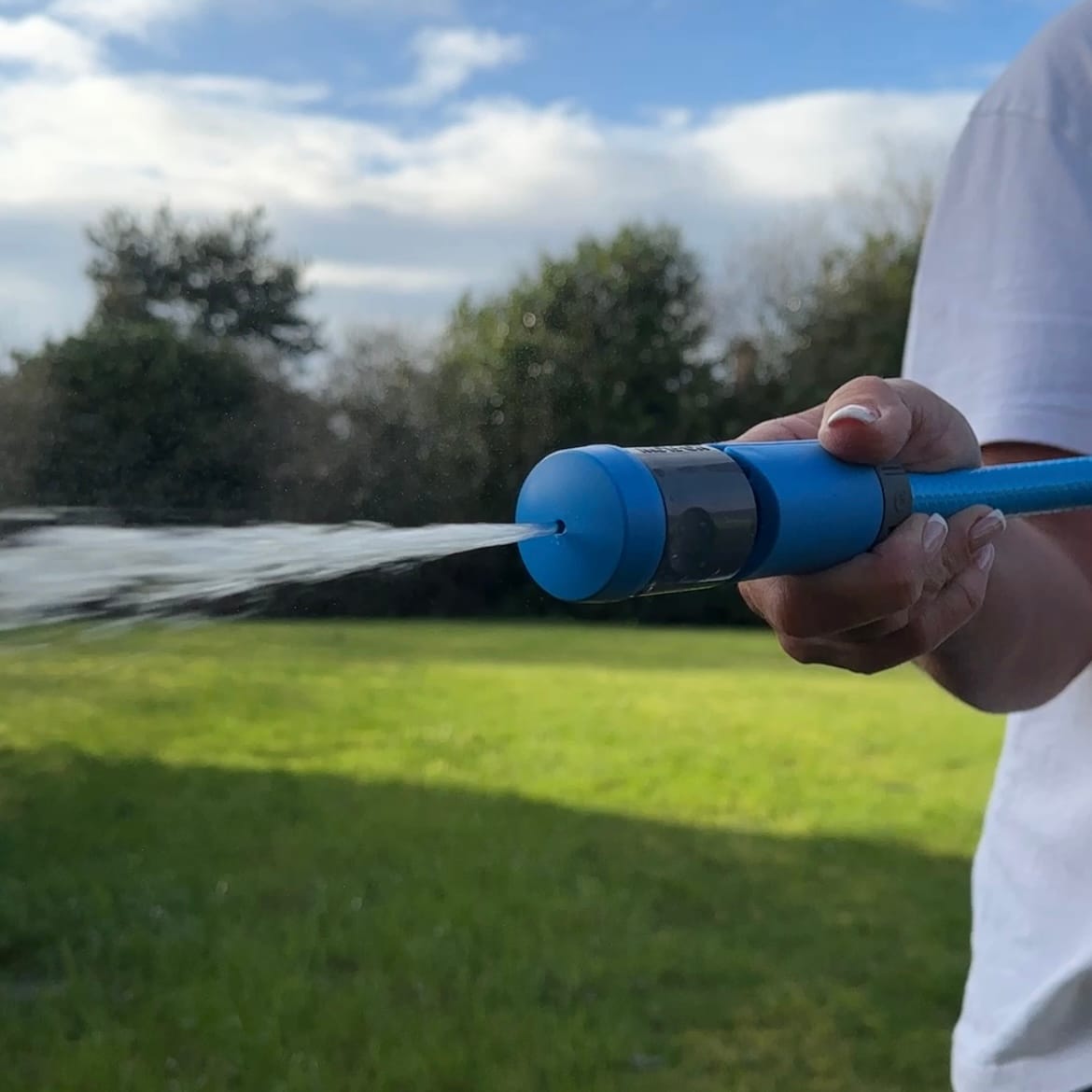
If you are able to use your garden tap and hosepipe, a JawGrip connector, designed by our small UK team, clamps onto the butt's tap without the fiddly internal teeth that traditional fittings rely on, and the Nozzle Spray End set to a fine mist is a properly gentle way to water new seed without blasting it out of the soil. The No-Flow version shuts off at the connector too, so you're not stood there holding a running hose while you move between patches.

Newly seeded patches are fragile for the first month or so. Keep dogs, footballs and garden furniture off them until the new grass has been mown two or three times, and don't panic if growth looks patchy at first, thicker grass fills in over several weeks, not several days. If large sections are still bare by late autumn rather than just thin, that's your cue to overseed again in spring rather than fight the clock through winter. While you're out there, it's also a good moment to drain and coil away hoses properly before the first frost to keeps things damage-free and ready to go again in spring.
Most drought-hit lawns aren't dead; they're just waiting for the right order of jobs and a bit of early autumn rain. Work through this checklist, water new seed however you are able and allowed to, and you'll have a lawn that's not just recovered but better prepared for next summer too. If your current hose kit is more duct tape than JawGrip, our Starter Set is a good place to start!

Address
The Barn (Unit 3)
Manor Farm Office Village
Flexford Road
Southampton
SO52 9DF
Contact Us
Shopping
Payments
Support
Legal

© 2026 Qwickhose Ltd | VAT NO. 883 904 488 | QWICKHOSE® / JawGrip™ are trademarks owned by Qwickhose